Listen on Download · Apple Podcasts · Spotify · Castro · RSS
Transcript
Automatic transcript: names and words may be misheard. Press a time to play from there.
Derek Oswald Guests of the AltWire podcast are recorded remotely. Due to the nature of remote recording, certain issues such as reverb or background noise may exist in some of these interviews. Although we will always try our best to clean up the audio in post, please be advised that certain issues may still remain. We appreciate your understanding, and we hope you enjoy the show.
Jared Weeks You are listening to the AltWire podcast, where we feature candid interviews with some of the hottest names in the entertainment industry. Get ready for your host, Derek Oswald.
Derek Oswald Hello everyone and welcome to another exciting episode of the AltWire podcast. I'm your host Derek Oswald, and today we have a very special guest joining us, Jared Weeks, lead vocalist of the renowned rock band Saving Abel. In this episode, we'll be diving deep into Jared's musical journey, exploring the highs and lows, and the exciting plans he has in store for the future. Let's get started. Thank you so much for joining us today, Jared. How are you doing?
Jared Weeks I'm doing fantastic. I got the sun on my side, and I got my drummer on my left side, man. We're doing great today. We're in the hotel room, and I'm overlooking Vegas, but me and the drummer have shared her room. I don't really like height. He's okay with it, but I'm the one sleeping next to the window. Go figure.
Derek Oswald Just put a blindfold on, buddy. You'll be fine. You'll be fine.
Jared Weeks I won't have to I have to.
Derek Oswald Now it's really awesome to actually see you here and with Saving Abel. It's actually been almost ten years since Saving Abel's released a studio album, and, honestly, even longer since the band has recorded an album with you. A lot has happened in that time. Having returned back to the band in 2021, how does it feel to look back on your history of the band?
Jared Weeks Looking back over the history, honestly, I wouldn't change anything. You know, a lot of times in our lives, we look back, and we're like, well, you know, if I could, I would change it. And, you know, sometimes in our life, you know, we would change things if we could, but considering the journey that I've been on and my path to enlightenness, I wouldn't change anything, man. I literally would do everything exactly the same because it has led me to this seat right here on the 60th Floor of Mandalay Bay, looking at Vegas, talking to you. And that person that's talking to you right now is something I'm really proud of. There's been a lot of hard work, consistent hard work that I've put into. Mental health was one of my big things. That's why I had to leave the day in the first place. So I just wanna start out by saying that, you know, the isolation was a horrible time in this country. It was one of those wet decisions, you know? We had the George Floyd, we had the isolation, we had the political pick a side or you're wrong, you know? It was just a really weird time. And because of that… I mean, I'm sure we'll get more into it, but because of that, that is is one of the things that has brought brought Jason and I back together from Saving Abel, the guy that I started the band with, twenty years ago. He brought us back together and put us back in the studio, and and now we've released two singles. And one of them, I think, is… It was at 39 or 31, which is a really good, awesome feat for us because it's been almost twelve, thirteen, fourteen years, you know, since anything like that for San Diego has happened. So hashtag grateful. But, yeah, I'm I'm really, like… I really loving the journey and and where I've ended up right now. You know, I wouldn't change anything.
Derek Oswald Obviously, for those who are unfamiliar, you did leave the band fourteen to pursue your own solo career. You mentioned that your mental health at the time played a big part on that. Can you talk a little bit about the journey that had led you to that decision?
Jared Weeks Oh, buddy. I I can talk a lot about it, actually. Well, let's just say, I will… I say this every night on stage before one of the new songs that we play. It's called From the Damaged. And I tell folks that I really hate the stigma that we put around mental health in this country. I hate that we're not supposed to talk about it. And especially for men, I hate that you're weaker if you do, or you're looked upon as weaker if you do. It really, for a while, it would trigger me. Like I would get upset and mad, you know? But now, you know, obviously further in my journey, I realized that some people just don't know what that's like to actually work for themselves and love themselves enough to try and reach better versions of themselves each and every single day. And that's something that I've literally put that first in my life because, you know, I've got a wife, I've got three kids I love so much. But one of the things that I've already… And I'm 40, 40 years old. So it took me, you know, until in my thirties to realize that if you can't love yourself, if you can't take care of yourself, if you can't provide for yourself, you can't do that for other people. I mean, I could sit there and tell my wife for years, I love her and this and that, and I'll provide for you and this and that. But if I didn't love myself, I would never put that foot forward to make the work, the consistency. See, that's what people don't like is the work because it's uncomfortable. But anyways, so anyways, I had to leave the band in 2013. It was back in the day when country music was getting bigger. Now I'm from Mississippi. I grew up with George Jones, Clay Walker, Tracy Lawrence. I'm riding around truck with my dad, you know, back roads. That's how I was raised. So I'm not too far out of my element where I was switching over. I grew up three hours from Nashville my entire life, you know, so Nashville was always the big city. So I went back and I started working with Skid Mills, the producer for Saving Abel's first three albums, this current one here that we're gonna be releasing soon. I got in there and I started doing the Nashville thing. I wrote with some of the biggest writers in country music. Jonathan Singleton, number one for Gary Allen, Luke Combs, Colt Ford, I mean, David Nail. I mean, all… Like, he he has gotten a songwriter of the year, like, four years in the road. Not… Four years in a row, two years ago. Just recently, somebody else is what? Ashley Gordy, I think, is his name. He's awesome too. But what I realized doing the national thing, some of these guys write two and three songs a day. Well, I tried that, and what I noticed was I felt like I was writing the same song every single time. So I'm like, man, I've tried it. I put out an EP, great songs, but I just felt like the universe had something else planned. I felt like the universe… Because when I quit Saving Abel in 2013, I came back to Nashville, and, you know, I'd just overcome, not just overcome, but I'd been off pills for probably six years, 2015 when I quit pills. And then, you know, drinking never really was my thing, but once I re… You know, not retired, but once I quit Saving Abel and came to Nashville, it was the only thing left. So I just started drinking so much, man. I got up to a shift of vodka a day, man. I would sometimes wake up in the middle of the night, take a drink, just go back to sleep. And what I've noticed, you know, through my journey is I didn't love myself. I didn't appreciate myself. I didn't value myself. I didn't feel worthy enough to live the life that I'd been given. And what I was doing was just slipping away. Call that sitting on the black couch. People live in this circle of negative, just life. And once you live that way for so long, you start kind of getting the vibe of, well, of course this happened. I mean, it's Thursday or this or this and that. Of course I'm broke. Of course it… And finally I realized, you know, through spirituality, I don't really do religion as much these days, but that we can be our own heroes, write our own stories. We're the ones writing them. And I see it every night at our shows. And I do get a little emotional talking about this because I see it on people's faces. They forget their value and they forget their worth. I see myself in them. And it's one of those things where my mission these days compared to what it was is it's no longer about blow jobs and egos. You know? To me, it's more about being a light worker, about being the bridge between those people because I've been on both sides. I've I've had everything I've ever wanted, and I've hated myself. You know? I've I've… And I feel like that I have the power to be the bridge for those people, to be the connection for those people to realize that they have… We all have the power inside of us. We are such brilliant, powerful human beings. That's who we are. And if all you're looking at is the negative, that's all you're ever gonna see, basically. So I've changed my perspective a little bit. And I spent years in therapy as well. Like, I had childhood trauma, and pretty much of everybody has childhood trauma, whether it be the worst of the worst or just a little bit. But something between the ages of one and 10 that develops us into who we're going to be from 10 to a 100. You know, that core vibration, like who we are, like, as ourselves. And, well, I mean, the funny thing was we were talking about isolation earlier. Like I said, it was a really weird time for us. It's like, Pick a side, you know? And I just bought a house, first house I ever bought. We bought our house. The very next day was stay at home orders. So I immediately went to work, got in the kitchen. I mean, I washed dishes in a kiddie pool outside for six months, you know? But I started doing housework and stuff like that. So I had enough to keep my mind off of things. Like being an addict and alcoholic like myself, being isolated isn't always the greatest thing. To be alone, like sitting there, like, that's when I start drinking, you know, that's when my mind gets to doing stinking thinking, you know? Have you ever heard the quote, you know, be the change you wanna see in the world? Yeah. So I took that quote and I asked myself, and I was like, Be the change you wanna see in the world. And I was like, Well, how do you do that? Well, I could tell you. And I get a little emotional talking about this too because I see it when I talk to people. There's things that we're not healed from. There's things that we don't address. And I call that shadow work. And doing the shadow work is looking at those things that you're not proud of, that you're ashamed of, that you're guilty of, you know, those things. And you have to sit down with those things. And I did this in therapy and I still go to therapy. You have to sit down with those things, have coffee with those things, have tea, talk about those things and heal with them. And I realized through the consistency of hard work and going to therapy and every single day waking up, trying to be better than I was yesterday, being the best version of myself each and every day. And I don't know, I started doing all the housework. I started looking at that quote, and then I realized the only way to do it is to change from the center out. Yeah. And that's when I started looking at myself and going to therapy. When I say going to therapy, it was isolation, so it was more like a Zoom call. But still, it worked for me. That's when I started realizing that, well, you've gotta love yourself, man. You haven't loved yourself. That's why you drink yourself to sleep. That's why you sorted all those pills. That's why you ended up in the hospital twice off of cocaine. Like these are the things you're doing. Like you don't even have the tools to deal with reality at this type of level, you know? So you're literally just damaging yourself. And, through consistency, and that's a lot the reasons that people don't always wanna change, you know? Like you can talk till you're blue in the face to someone about how they need to change their life, but until they make the decision, yeah, you're right, it's never gonna happen. So that's hard. And the people are scared of the word because it is uncomfortable. And I'll be honest, like, it was uncomfortable for me for about a year, a year and a half. And I've been off of alcohol. I've been sober for almost four years now. And the first year and a half was… It wasn't the hardest, but it was the most important for me. Yeah. You know, I had to make deadlines. I had to show up. I had to be present. I had to be responsible. You know? And as I started working and doing things like that, I kept noticing this strength inside of me building up. And now it just kinda vibes. It's like my natural core vibration, and I just… It's just what I operate at, but it's been a lot of hard work doing that. I don't know, man. I just… It's a little bit… And I don't know if I'm wording this correctly, but for me, it's a little bit less, maybe on a different scale, but it's a little bit less about the music for me these days. And it's more about the mission that I have to help folks. That's where I'm standing right now because I know how good I feel. I know how much I love myself and I'm confident in who I am. And can't nobody make me doubt that ever. And I want people to know that they have the power to live the dream life that they've always wanted, to be worthy of the life that they're living right now, to realize that they are the most valuable asset in their own lives and they can be in other folks' lives too. And that's more or less my mission these days is to let people know that they're not alone, man. We've all been there and we all do this together and we're all here for each other. And that's basically what I'm preaching these days. But hopefully, you know, I just want people to feel better about themselves after speaking to me. That's what I want these days.
Derek Oswald And, you know, I'm so thankful for you being transparent about it because, look, I'm a man too. I know the struggle. The whole fact of the matter is, you know, due to the way society frames things, us men gotta be tough. We gotta be the providers. We gotta, you know, be the strong one. But the fact of the matter is, you know, we have hurt too. What I'm learning in therapy, you know, they call it cognitive behavioral therapy. It's reframing your thoughts and your negative thoughts into something more positive, and it's not the the easiest thing in the world. So one thing that I really wanna know, you come back with Saving Abel. You start working on a new album. As you're going through the songwriting process and you're realizing that your thoughts have completely changed Yes. How has your songwriting changed as you've gone through your process of self discovery?
Jared Weeks I write about things I know, man. I write about things that are close to me. And like I said, it's not about egos or blowjobs anymore. But on this new album that we're doing, the first single we released, Baptize Me, it says, I'm clawing my way out and I'm not going back again. And then it says, We're not getting out alive, so it's time to live again. That whole song is about the power we have inside of us to take control back over our lives, to pick ourselves up, dust ourselves off, start loving ourselves, and keep going forward. We all have that power inside of us. It's really easy to forget, but I I promise you, we all have that power. The second single, fire. I wrote that during the George Floyd, political pick aside type part of the country, and that was… That song, writing that song is the song that made me go, be the change you wanna see in the world. Well, how do you do that? You start working on the inside. And that's why the song says, don't play stupid anymore when you really know what's going on. You know what I'm saying? It says, you had everything you needed all along. Don't play stupid. You know what you're doing. Let's do this. Let's be a better person. Let's work on ourselves. This entire album, the song that I was talking about earlier, From the Damage, we tried writing that song three different times for this album. You know, at first we wrote a song, it was rocking, it kind of sounded like Van Halen, but we were like, nah, that's not it. Dude, when I first came back to Saving Abel, my wife and I were like, we should look at something like calling the album From the Damage. And when I say From the Damage, I don't mean looking over a burnt down city with smoke in the air and trees and buildings crashed. What I mean by that is life can still come from broken things. That's what I mean by that. And I don't want people to ever forget that. Like you might be broken or you might feel like you're broken, but you're not. You're not. You have the power inside of yourself to help yourself, I mean, and others. But this whole album that… From the Damage song, I've never written a song like this before. We tried to write it during this album cycle. We didn't like the first song, and then we switched to maybe we should make it like a ballad, call me a sinner, call me a saint by Shinedown, you know, piano. What an amazing song. So I tried that, I was like, No, that's not it either. So I'm just searching and searching for this song that, like, speaks about who I am and where I've come from and the battles I won and things I've gone through. And I was asleep one night, like right before bed. Know, my my wife's in the bathroom, you know, taking her makeup off, brushing her teeth, stuff like that. And I kinda pass out for, like, thirty minutes. And I just wake back up all of a sudden and I write down the lyrics- for the entire song. And it says, Redemption came under my wings and lifted me up so I could see all the other things that made it harder for me to fly above the wreckage. But look what came from the dead. I woke up, I wrote that down, and we recorded it last year on my birthday, October 19. And ever since then, it's been one of my most favorite Saving Abel songs to play live. Nobody knows it, but it's such a kick ass song, dude. Saving Abel now is actually who I imagine we should have always sounded like. So, like, that's going well as as well. But this whole album, it it… Talking about songs being different, lyrics, messages, not about egos and BJ's anymore. It's about the power that we contain inside ourselves. It's about supporting each other. It's about being there for each other. It's about being the person that you wanna be. It's about loving yourself. It's about not forgetting that you're worthy and that you are valued, and this life is even better with you in it. So go get yourself help. Help yourself get fixed. I'm here for you. You're there for them. We're all here. And that's basically what this entire album is about, the power that we hold inside ourselves to make ourselves and the world a better place. I mean, I don't know how else to pull it. I'm kinda just speaking generally here, but maybe I don't even know the entire message that I'm ready to… Trying to put out, but that's because I'm still searching as well. Each and every single day I wake up and I try to be better than I was yesterday. And I find that if you start doing that daily, like even the crappiest situations, and I know this is a little far fetched for some people, but even death, even situations like that when you lose folks, there are no coincidences in life. We are in these situations because the universe or God, however you wanna label it, is trying to make us learn, is trying to make us grow. And if you start looking at your problems as opportunities, Like I have a problem of being impatient. Well, I don't look at that as a problem anymore. I look at it as an opportunity to show them how patient I am. You see that perspective plays a big deal to me, and I feel like it would for everybody. You know, you just gotta figure out your old formula, how to get through it. I mean, that's what this album's about. It's about redemption. That's what it's about. And to me, that's the sweetest taste in life for me right now. I'm sure there's, you know, at other points in my life, there'll be something much sweeter, but right now that's my fuel. And it's got me burning hot, man, and I'm ready to take this to the world, to The States, to the world. Anywhere we go, I want people to feel better about themselves.
Derek Oswald You know, it's kind of funny. Like, you are probably going to get me the closest to getting emotional on one of these podcast episodes because it took me the it took me the longest time after my father died to really get the purpose, the point behind it. I I hated the world. You know? I was looking up at the sky cursing God being like, you know, he did nothing wrong. He was a great person. Like, why do you take him when there is so much evil in the world and that's still around? Like, why did you take my dad away from me? And it was one of those things where it was like, I can now look back on it from an adult perspective and realize that I had to grow. I was You I'm… I love you. You're making me smile right now, but go go ahead. It's just because I see it in… I hear it in your void. I like to kind of joke around that I was a 28 year old man child because Me too. I looked at the world from eyes of an 20 instead of somebody who was about to be in his thirties. You know, I was naive. I looked at the world and thought that, you know, the same thing we always think when our parents are growing up that our parents are invincible. We never prepare ourselves mentally
Jared Weeks for the day where we're gonna lose them. Can I tell you something real quick? And I told this to my wife when Nana died, she was like the godfather of the the family on on my wife's side. Yeah. But I believe as human beings that we're vibrations. We are frequency. We are energy. That's what we are, and energy is infinite. So your dad's still here with us. Yep. Every ripple, everything that he was a part of, it will infinitely be vibrating and rippling throughout the time forever. You can't… And energy is infinite. So it might be in a different parallel universe, however you wanna look at it, but your dad's still here. You can't see him, but you can feel it and you know that. And that right there should lift your heart every day.
Derek Oswald Amen. Amen. That was honestly what I had to learn. My mom lost her husband of forty years. She was like a boat without its rudder. She didn't think that she had the strength to be on her own. And I'm like, mom, you can do it. But one of the things that we all had to do is we all did grow in our own ways. And I'm proud looking back at the entire family seeing the people we've become. And that kind of brings me around to a question I wanted to ask. So you left the band for a little bit. You come back in, You set foot in the studio. How did it feel coming back into that studio for the first time?
Jared Weeks Like, never took a break. It was… And I don't mean because I'm so good or because we're badass. I mean, because, I guess, where my heart was at the time and where I was at the point in my life and how I was changing and learning, like you just said about yourself, learning to see the positive and the negative things, that's just a… We all have habitual behavior. Like it's not all that's bad. I mean, I have a habitual behavior when I'm about to yell and scream to pause and stop. Yeah. Like that's a good habitual behavior, but I had bad habitual behaviors too. But we all have those habitual behaviors, and we get caught in that circle. That's all we see. If you're looking for bad, that's all you're gonna see. But as you say, finding the positive things and the negative things, that's really important. But when I got back in the studio, the first couple of months, it was really fun because Jason and I felt like we were rediscovering the passion we had when we were 20, 21, 22, 23. And that just lit me up like a kid on Christmas. I'm like, Wait, it's still here? Yes, let's go. So it was such an amazing experience to go through and to still be going through. I'm still learning so much more about myself and not finding new things to write about, but finding different things in my life and putting a new twist, and not a new twist, but a new method or however you want to look at it to help other folk to deal with their lives. Yeah. And I just keep watering that fern, man. Like, you know what I'm saying? I keep that relationship with myself and the journey I'm on. I keep it healthy because I like where it's growing. I like how I'm growing. I'm loving who I'm becoming. And I don't know how else to tell people that it is possible. I used to hate it when people were like, what was it they used to say? Oh, what was it? I can't even remember, but it's somewhere along the lines of like, Be the change you want to… Oh yeah, the only one that can stop you from changing is you, or Be the change you wanna see in the world, or you can… I'm just like, when you're weighted down by all that negative and you're not cool yourself, you're like, Shut up, man. Shut it up, man. You ain't know what you're talking about. But now sitting on this side of the fence, I'm just like, y'all can do it. I'm telling you it's possible. I hated those folks too, but look at me. It's like, look at me. Who'd have thought? Not me. You know? And
Derek Oswald this is the change that we have to push in the music industry because just even… I feel like we're in a transformative period because we've lost so many great people in the music industry, even in the in the past decade to suicide. But the fact of the matter is it's because of how things were when they were growing up. It was taboo to mention you had depression, to mention you had addiction, mental illness. If you went in to a hospital because mental health wasn't really understood, even in the nineties, you tell someone that you're having suicidal ideations, they stick you in the psych ward. They treat you like you are some complete mental case. I agree. And when you're depressed like that, when you're reaching out for help, you don't want somebody to make you feel like you're crazy.
Jared Weeks You know, the number one thing for people… Well, for addicts, at least for people like me, is purpose. Purpose is the best. I'm not gonna say cure, but it's the best cure for people like me, addict, alcoholic. We need purpose. We need purpose. Something that makes us focus on something that's better or something better that we want for ourselves or to push ourselves to be better. And I found out that music was that for me. I mean, I didn't know that growing up, but like when I wrote Addicted and eighteen Days and Drowning and all those, you know, other songs, It wasn't… That wasn't where I was writing from. Now knowing what I've known and gone through what I've gone through, that's what I look at now. I don't know, man. I'm just… Sometimes I'm just giddy just because I'm proud of myself. I made a commitment to myself, and I fucking held to it. I mean, I relapsed a couple of times. I mean, I was at a a six week outpatient class after I left the detox. I mean, I relapsed in that. And it was only supposed to be like a three or four week class. But being honest about it, I went in and I was like, Listen, I got drunk last night, or, You know, I had a bad week and I did this. And because I did that, you know, the guy there was like, well, why don't you stay a couple more weeks? And I was like, okay, cool. And I do. You're gonna relapse. Like that shit's gonna happen. But what's important is the power you have inside of you to say that's not me. That's not who I am. So I'm not gonna sit here and moan and cry about it. I'm gonna do better and I'm gonna keep going. A lot of times, someone makes a commitment to themselves and they fall, they have a relapse. And a lot of times people get down on themselves and they sit back down on that black couch, as I was talking about, and forget how valuable they are or how worthy they are for their lives, and then they get stuck there again. It's habitual behaviors, which is fine, but you don't have to be that. When I relapsed, what happened with me was I was really in so upset with myself for not even my commitment to myself, but I didn't stay there. I went, Okay, that's not who I am anymore. Let's keep going. And that was the important thing for me, is to keep going. Don't sit there and saturate in that, keep going. And because I've done that every single time, hi, I'm Jared. It's the new me. I love myself. How you guys doing?
Derek Oswald I wanna tell you something. I'm proud of you too. We need more success stories. I need to hear more artists going through these struggles and coming out of it. I'm tired of hearing that we lost another great person. I mean, I miss Chester. I miss Chris. I miss Avicii. Chris was my favorite, man. It's like we need to hear of more people who felt emboldened to get the help they need.
Jared Weeks People need to know that they're not the only ones. That's right. Because Chris Cornell was loved by the world. He was loved by the world. Chester? Loved by the world. Hell, he was loved by Chris Cornell, you know? But sometimes that stinking thinking in your mind, you know, you can get lost in it and just think that the world's better without you. And that's just not the case. That's just not true. A 100% that's not true. The world is 100% better with you in it because you're helping all of us, even if you don't know it. Your life, the things you do, the positive things you do, how you help this person or do that for that person, that makes the world spin. And we do need more of that. Absolutely.
Derek Oswald I agree with you on that one. And I hope people listening into this get some help from this and get emboldened to, you know, seek help if they're struggling as well. I suppose I just wanna wrap this up by just asking. You've gone through such a journey since leaving Saving Abel, coming back to them, and working on these badass new songs. Where do you wanna see the future of the band go from here? What are your ambitions moving forward?
Jared Weeks My ambitions, I mean, as far on the technical side, I would love to have a more cohesive show. I would love the… I would love, you know, all these productions, pyro, like all that, that's the work side of things. But honestly, like mentally and my favorite band, Theven Dust and Chinedown, I guess you can put them in the boat the same, but I watched Chinedown. I was out with them on the Sound of Madness tour, and I've watched that band go from where they were. They all came together. They started holding each other accountable. They started focusing on the same goals. They started helping each other. They started being happier rather than than depressed all the time, you know? Like we all walk around just feeling like, Nah, I don't even care, you know? So easy to do that. But it's been a really huge inspiration and a motivation for me to see them from 2008 to where they are now. Yeah. And the fact that that band is so humble and kind and that they talk about mental health too, they realize that these are just symptoms of being human. And that's okay. That's okay. But that's where I like to see myself. That's where I'd like to see my band. Somewhere along that model of helping folks and being in it more for each other and less for, I gotta pay my mortgage or buy a BMW or go to Vegas and spend a million dollars, you know? Those things are all material to me, in my opinion, but what makes me the person I am each and every day is what's in my heart. I'm proud of myself. Like I said, I've held a commitment with myself. I can trust myself now. Used to, it's like, No, I better not do that. I mean, like, why? It's like, because I've seen me do it before. You know what I'm saying? It's like, I don't have to, you know, live like that anymore. You know? It's… I just really am proud of who I am, and I want other folks to be proud of who they are too because they deserve it. I want your message
Derek Oswald to reach the world. I want you to be able to accomplish the goals that you set out. I just wanna thank you so much for joining us today. It has been an absolute pleasure speaking with you. Man, you literally just filled my heart. Thank you. That… Things like that from people that know me, you know,
Jared Weeks it lets me know that I'm doing the right thing and that I'm gonna keep doing it. And people support people like that. So thank you. That really does mean a lot. Words of affirmation is one of my love languages. So thank you. It's mine too. Hey. Thank you so much for joining me, buddy. I really do appreciate you. Yeah. I appreciate you too, brother. You you keep being the best version of you, man, every day, and you're gonna be just fine. I promise.
Derek Oswald You too. You too. And that brings us to the end of this episode. I wanna thank you for listening to the AltWire podcast. If you like what you heard, please feel free to give us a review on your DSP of choice, and stay tuned for more episodes as they become available. My name is Derek Oswald, and I thank you for listening to the AltWire podcast.
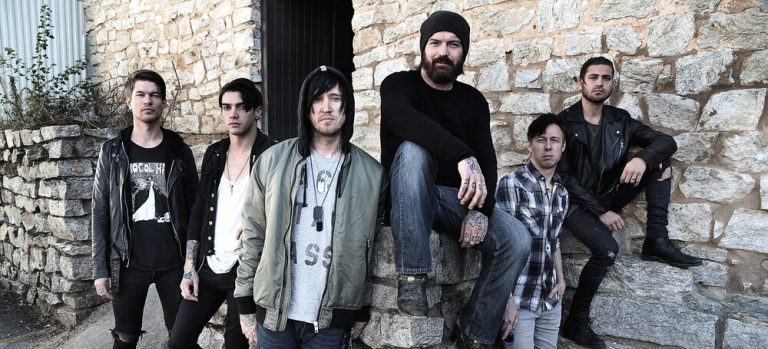
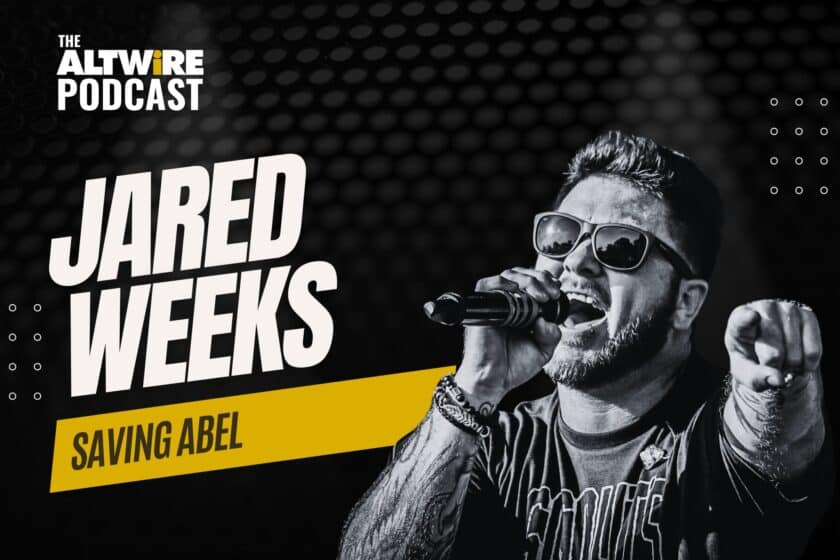
As you can see from the episode image, there’s never a shortage of energy when it comes to Jared Weeks. However, that energy has come at a cost at times over the past two decades, including struggles with mental health and addiction, which have taken a toll on both himself and the band.
However, Jared’s back, and has a great story about his journey towards recovery and self-love. He describes how his experiences shaped his songwriting process and is now more focused on sending a message of redemption and empowerment. The future of Saving Abel is discussed, with Jared revealing his ambitions for a more focused and cohesive show inspired by bands like Shinedown and Sevendust.