
Disclaimer: Kulshan Studios sent me the preset packs for this review, but had no editorial control over the final piece.
A clean Subsequent 25 popped up on Facebook Marketplace for $550. Honestly, I probably should have owned a Moog by now.
I’ve reviewed a ton of synths, and I’ve lost entire weekends to scrolling gear listings, looking but not biting. So admitting that an actual Moog had never made it into my studio, even something tiny like a DFAM, feels almost embarrassing. And I call myself a synth reviewer. Shameful.
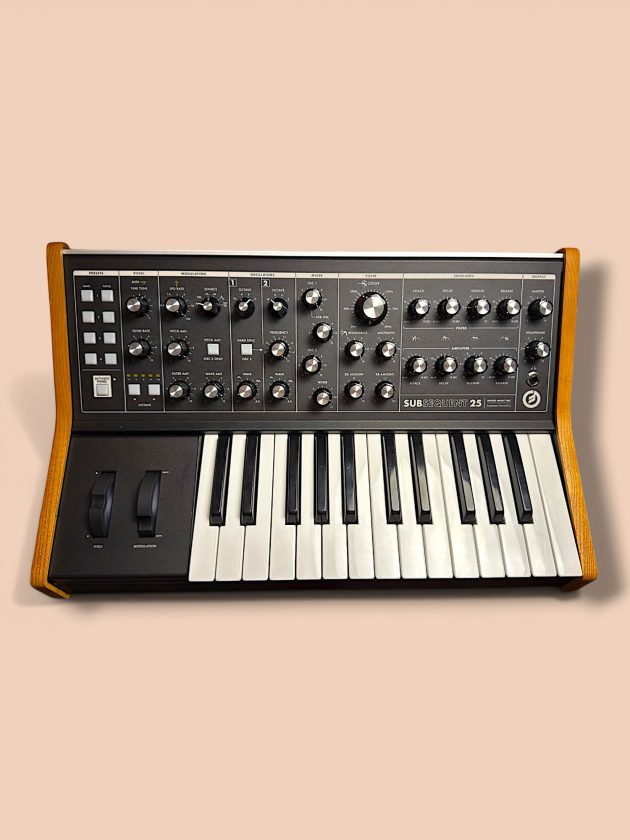
I have always liked the look of the Subsequent line: wood side panels, the classic Moog control layout, that curvy silver rear panel with the MOOG logo stamped across it. At that price, my first thought was obvious: something must be wrong with it. Facebook Marketplace is Facebook Marketplace. There is no Reverb-style safety net, and there’s always a risk I’ll buy something that’s dead.
So I did the usual nervous-buyer routine and played a game of 21 questions. The seller sent photos and videos. It turns out he knew what the synth was, that it was a low price, but had upgraded to more expensive gear, and wanted it gone. Reverb prices were sitting roughly $250 to $300 higher for similar used units, and the Subsequent 25 had already been discontinued. I wasn’t likely to find another clean unit at this price. So I sold some old gear, got the cash in hand, and met him at the church.
And it worked. Plugging in and powering on, the first sound out of it was the reason I wanted a Moog in the first place: thick ladder-filter bass. Round, low, slightly rude. I prepared to spend most of my first weekend with the synth dialing in knobs and experimenting. But then I learned that the Subsequent 25 has a companion editor and librarian app, and I got curious whether any fun third-party presets existed. There weren’t many.
Hardware synth presets are already a smaller pond compared to the endless Serum, Vital, and Pigments ecosystem. But the Subsequent 25 has an even more annoying problem: most of the obvious Moog preset support points toward the far more popular and powerful Subsequent 37. The 37 is the larger sibling, with more controls, more memory, and a much larger user base. Unfortunately, Sub 37 presets do not just drop neatly onto the 25. The two synths are related but not interchangeable, especially once modulation and front-panel differences come into play.
Kulshan Studios is one of the few companies actually bothering to make presets for the Sub Phatty/Subsequent 25 family.
I tested all five of their banks for the Subsequent 25/Sub Phatty: Tryp, Talus, City, Feel, and Dance!. The Subsequent 25 does not include onboard delay, reverb, or chorus, and many patches will sound best with a little extra texture. Kulshan recommends pairing them with Virus TI-style effects.
Not owning a Virus TI (still wish I did), I focused on the next best thing: running Moog into my interface, routing its audio through my DAW, and using the FX side of a Virus TI emulator on the incoming audio. Not quite the same as feeding the Moog directly into a Virus TI, but it surprisingly worked well. The effects filled in some of the space missing from the dry patches, particularly on the trance and progressive sounds.
Kulshan Studios Tryp Psytrance Soundset
Tryp is the psytrance bank, and probably the most natural fit for the Subsequent 25. The rolling basses hit hard, the squelches have plenty of bite, and the synth’s naturally aggressive oscillator character works well with le matériel. You’ll find great glitchy patches, low rumbles, and lots of saws in here. Speaking of saws, as I found during testing, many of these preset banks caught me off guard with how well the Sub 25 handles higher-pitched saws and plucks. Some of these even reminded me a bit of the MiniNova.
Kulshan Studios Talus Trance Soundset
Si Tryp gave hints at just how well the Sub 25 handles plucks and screaming/piercing leads, Talus leans into that side of the synth. There are bass patches in Talus, but they’re not the reason I would buy it. This bank is more about atmospheric leads, plucks, and gorgeous melodic accompaniments designed to be paired with reverb and delay. If your lane is uplifting, progressive, or melodic trance, you will likely get the most value here.
Kulshan Studios City Techno Soundset
Ville takes a moodier approach. Rather than relying on hand-in-the-air hooks, many of the patches focus on darker sequences, rhythmic movement, and gradual variation over time. You’ll still have strong, squealy leads, buzzy synths, and echoey plucks in here if you want them, but this is Kulshan’s “darkest” Subsequent 25 offering. The Subsequent 25’s filter and multidrive sections complement this material particularly well, adding texture and edge. Of the five banks, this was the collection that proved most comfortable in darker electronic styles.
Kulshan Studios Feel House Soundset
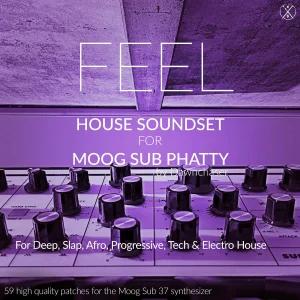
Feel is the most mainstream accessible bank. There is a proper ‘Donk’ bass, Afrojack-style Dirty Dutch squeak leads, a buzzy patch that, despite the 90s/00s focus, could feel right at home on Gap Band’s “You Dropped a Bomb”. While House producers will find the most immediate value here, several patches could easily cross into adjacent genres.
Kulshan Studios Dance! Hands Up Soundset
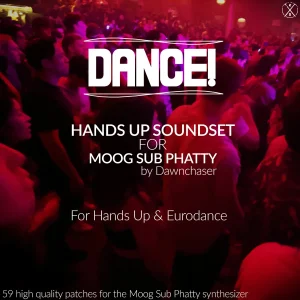
Dance! made me smile for its absolute cheese, given its Eurodance-inspired soundset. You get Acid squelches, sirens, bell-like plucks, and low subs that sit nicely under offbeat patterns. There are also patches that land right in the “Better Off Alone”, Vengabus, or “Be My Lover” zone. Perfect for those seeking brightness and who aren’t ashamed to chase nostalgia or cheesy fun.
Across all five, some overlap is unavoidable. But what I loved about these is that the Subsequent 25 was getting typecast hard as a bass synth. Kulshan showcased that plucks, leads, acid lines, donk basses, and sequences all translate well within its monophonic limitations.
And at $550, I would’ve been perfectly happy if the Subsequent 25 only ever handled bass duties. These banks prove that limiting it’s capabilities to that is wasteful thinking.
But it would turn out that Kulshan impressed me, twice. Right as I was wrapping this review period up, I got a great deal on a MiniNova and learned that Kulshan’s preset expertise makes other synths shine, too. The MiniNova was already a great synth for the price to begin with, and has quickly become one of my favorite synths, which is crazy when you contemplate what I’ve played with lately. In the past few months, I’ve had a NINA, a 3rd Wave, and a Sequential Fourm in front of me. The MiniNova still kicks ass, even when put aside newer synths.
Part of that is the lineage. The MiniNova shares its engine with the UltraNova, and the whole family traces back to Chris Huggett’s work on the Supernova line. Those synths were all over late 90s and early 2000s trance, and Kulshan’s trance soundset for the MiniNova pays heavy homage.
Currently Kulshan has three dedicated trance banks for the MiniNova and UltraNova: Traverse, Traverse 2, and Traverse 3. Ninety-four patches each, all trance-focused. The artists referenced across the three banks read like a late 90s and early 2000s trance retrospective: ATB, Ferry Corsten, Roger Shah, Solarstone, Cosmic Gate, Armin van Buuren, Paul van Dyk, Aly & Fila, Rank 1, Vincent de Moor.
I ran all three banks through Devious Machines’ Infiltrator using their trance presets rather than the Virus TI emulator I used on the Sub 25. The MiniNova’s onboard reverb and delay is passable, but these patches sound much more complete with a stronger effects chain behind them, which Kulshan themselves recommend.
The plucks were the immediate standout. These sit right in that late 90s and early 2000s trance pocket: Cream Anthems or Gatecrasher, big plucks, wide chords. There’s a supersaw width to them that Kulshan compares to the JP-8000, and I feel like that was very accurate. The basses covered rolling basses, offbeat basses, subs, and distorted variants. Some had the Sub 25’s kind of low-end weight. Others favored the tighter, more focused JP-8000 character.
All in all, I couldn’t recommend these enough. I bought two used synths that I already liked from YouTube demos and my own tinkering, and then Kulshan made me love them even more. But even if you don’t have great hardware, their offerings extend to VSTs as well. We highly recommend you give them a try!
See more reviews ici.
