
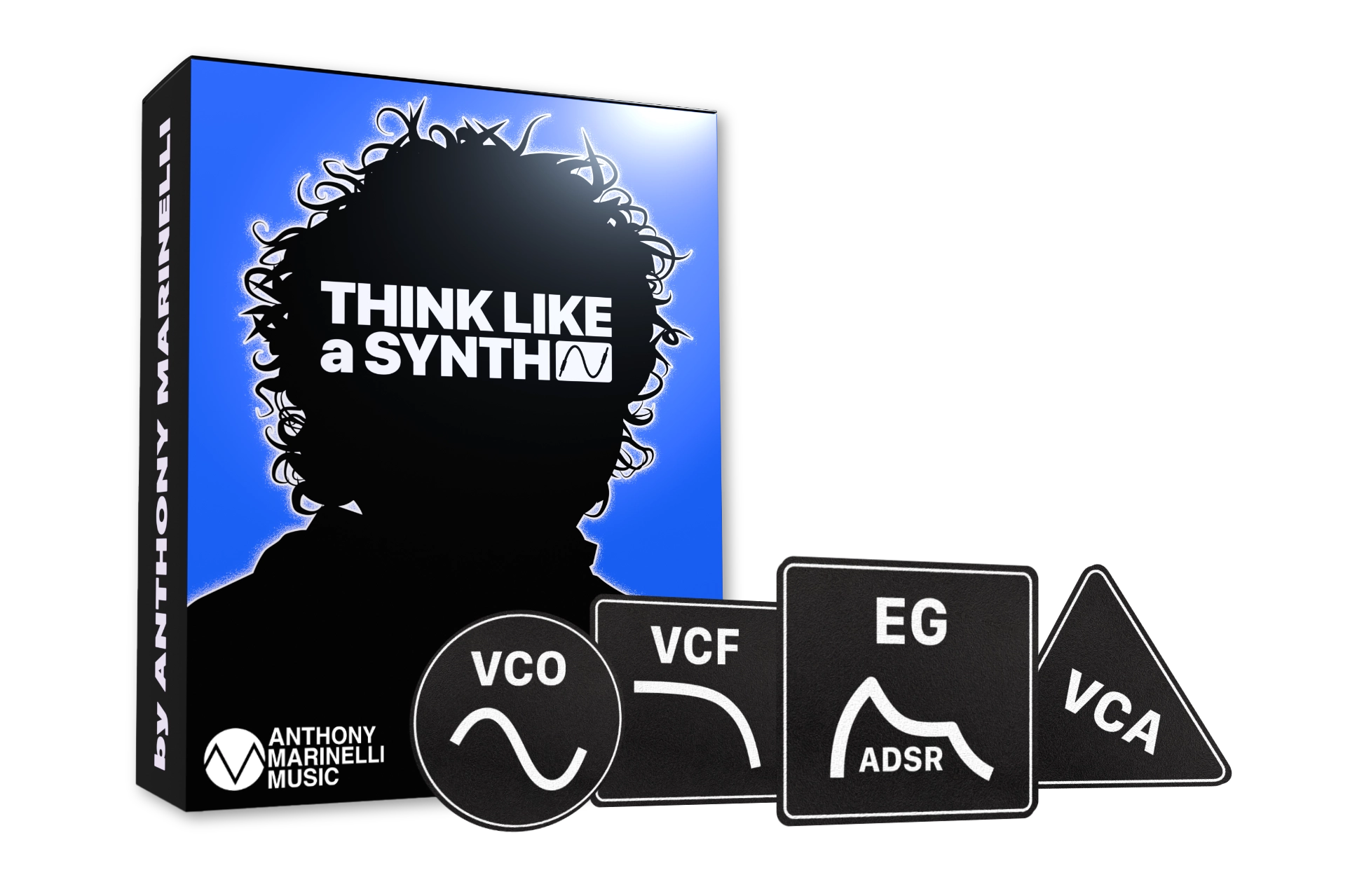
We received the Think Like a Synth course complimentary from Anthony Marinelli’s team after contacting them to inquire about a review. We have received no financial compensation for this review.
I’ve spent years “using” synths without really knowing them. Following “recreate this sound” YouTube tutorial videos, preset surfing, and the occasional lucky accident after twisting knobs blindly. I could tell you what a cutoff does, what an LFO is, and knew how to play with resonance and filter envelopes to get a nice acid squawk. But if I had a sound in my head and tried to build it from scratch, I wasn’t confident I could get there on purpose.
That’s the headspace I was in when I clicked on a Facebook ad for Think Like a Synth. Marinelli has been behind some of the most iconic synth programming in pop history, and Thriller in particular has always been a reference point for me. If the guy who helped shape some of those sounds is teaching synthesis, I wanted to learn from the best.
What Think Like a Synth is
Think Like a Synth is an online course built around subtractive synthesis, taught through a structured set of video lessons with chapter navigation, quick notes, and quizzes. As of January 2026, the course is presented as 31 episodes, with two of the episodes being recent additions. The pacing is deliberately detailed, and some lessons run longer than 15 minutes.
The first thing to understand going in is that this is not a casual watch-along. It’s a study course. If you want something you can half-watch while scrolling your phone, you’ll lose useful insights.
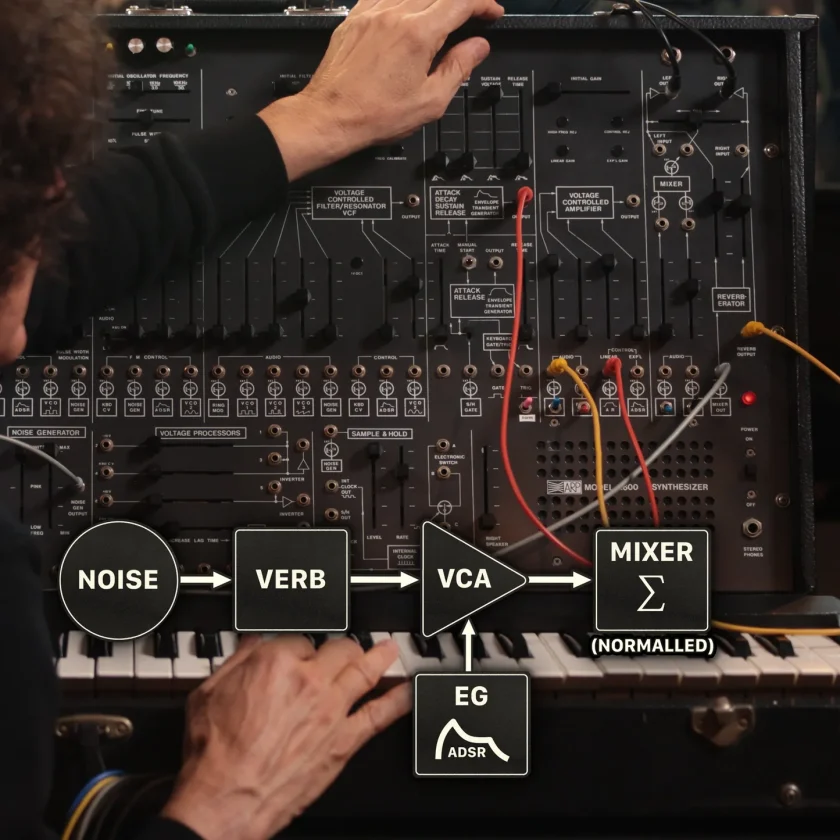
I took the course over about two months on a MacBook Air M2, mostly listening on my V-MODA M100 headphones. I followed along using a Korg ARP 2600 emulation in Ableton Live, pausing frequently to match Marinelli’s moves and keep the course on track. That said, you do not need to have an existing ARP2600 emulation, as Cherry Audio’s emulation of the synth is included in the cost.
My first impression was simple: this is thorough. Real, textbook-deep thorough.
To view the course, you need to log in to Teachable and stream the lessons. I did not see any option to download the course for offline use.
Using Think Like A Synth
My routine didn’t change much for two months. I’d watch a segment, pause to replicate it in the VST, then resume and repeat. I spent as much time rewinding and matching settings as I did watching, because I didn’t want to absorb the course like background noise.
You’ll benefit from a similar approach, as the value of this course only works if you treat it like a hands-on lab. Powering through without stopping might cause information overload. Slowing down and treating each lesson like something you need to demonstrate back to yourself makes this so much better.
The course adopts a left-to-right signal-flow mindset. If you already think that way, great, but for me, instead of “turn stuff until it works,” I started building patches with intent, in an order that matched how most synth panels are laid out.
Some of the first wins were basic. I now hear the difference between waveforms far more reliably. The difference between a saw and a triangle. A pulse and a square. Even when they’re close enough that I used to question myself.
Marinelli gives you those small “this is what to listen for” signposts that stick. One example was listening for a “buzz clipper” type sound as a clue that you’ve moved away from a true square wave into pulse territory. Once you hear it, even on synths with no screens, it’s easy to find your way.
How Think Like A Synth Teaches
Compared to something like Syntorial, Think Like a Synth feels more like a paid Masterclass course. Syntorial is for absolute synth virgins, and teaches your ears through interactivity, including hidden patches where you recreate sounds without seeing the settings. Think Like a Synth’s approach goes deeper into the technical and scientific side, including how waveforms oscillate and how audible frequencies work. It does not have a built-in synth (which is why the ARP2600 emulation is a must), and the biggest “exercise” is still the follow-along workflow. If you’re not willing to pause and practice, you’re missing most of the point.
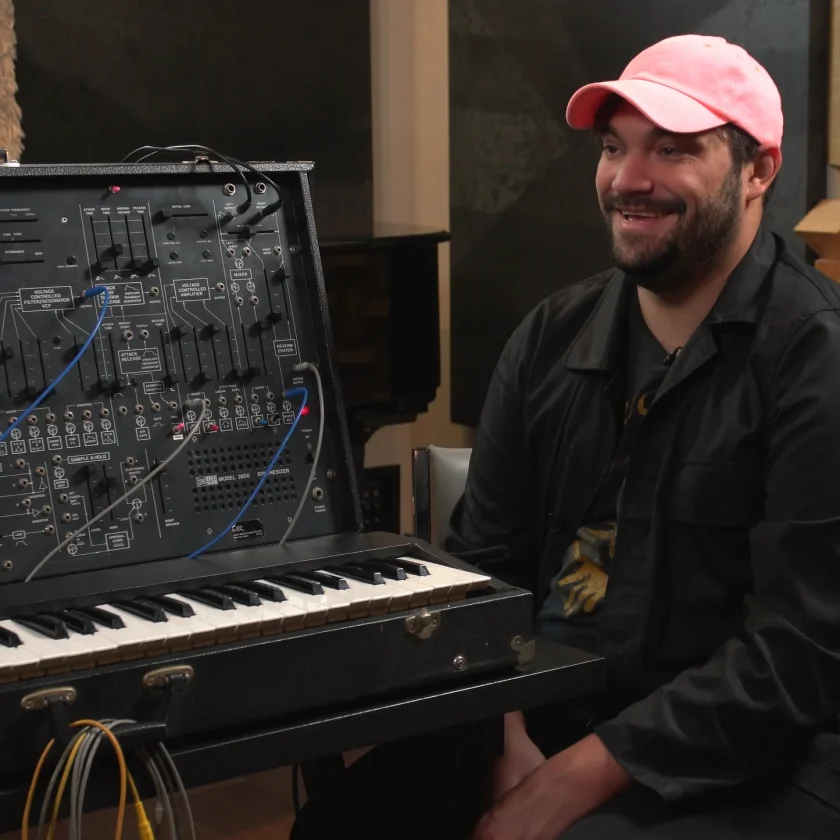
A helpful touch is that Dante, Marinelli’s son, appears alongside him and will occasionally stop to clarify something Anthony said, often by slowing the moment down and restating it in plainer terms. When the instructor is operating at “legend level,” having someone in the room, more “like you”, to slow things down and pull a concept back into plain language keeps the course from drifting into expert-only territory.
Strengths
The main reason Think Like a Synth works is depth. You’ll find in some other synth tutorials out there that it’s typical for concepts to be briefly introduced and then quickly moved on from. With Think Like a Synth, everything from Oscillators, Waveforms, VCAs, Tremolos, Sample & Hold, etc. gets its own chapter, and a lengthy video.
And I think a lot of this has to do with how Anthony was taught by some of the greats, like Quincy Jones. This was long before computer software or a quick YouTube video that ran through everything in super quick time. He had to learn every nook and cranny of some very complex synths, and in the process became an expert.
As such, he takes time on the “how” and the science behind each concept. To expand the knowledge of people who already know a little and are tired of fiddling with knobs without a clear purpose. The left-to-right signal-flow approach, along with follow-along pacing, pushed me toward more repeatable habits rather than lucky accidents.
Weaknesses and friction points
The tradeoff is that it can feel dense if you’re starting from zero. If you’re a complete beginner, it’s going to feel like being dropped into a detailed lecture before you’ve built your base. The quizzes help, but there isn’t a built-in synth environment like Syntorial’s hidden-patch approach, so you really need to follow along in your own VST or hardware to get the full benefit.
Verdict
I received the course comped, but I still paid attention to whether it justifies its cost. Truthfully, this is similar to professional Masterclass courses in cost, and truly isn’t ridiculous when you consider what’s being offered. The value comes from depth and from the teacher. Anthony has been doing this for decades and has the knowledge and discography to prove it.
Think Like a Synth earns its price by actually teaching you how synths work inside and out. If you are a strict preset surfer who isn’t interested in learning why things work, you’ll probably bounce off it. And if you are a complete beginner who needs more interactivity and guided practice, you may want to start somewhere more beginner-focused first.
However, if you’ve spent some time behind hardware or software synths, are synth-curious, and want to become synth-capable, this course moves you from guessing to building.