
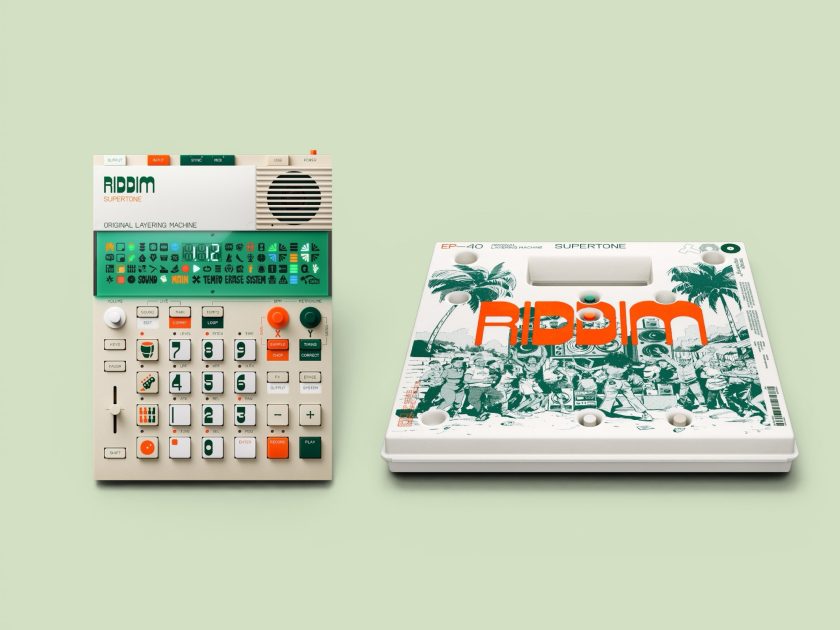
Many years ago, Teenage Engineering had an idea for a reggae-themed Pocket Operator. What shipped in November 2025 was something else entirely. Turbulence and Junior Reed performed on an unreleased unit at Weddy Weddy Wednesdays in October. King Jammy and the team ran workshops at Alpha Boys School. Thirteen Jamaican artists: King Jammy, Mad Professor, Mafia & Fluxy, Dre Skull, MPC, Rigo Fuego, Mighty Crown, Baby G, and more, put their hands on this machine before it was a product. By the time it landed as the EP-40 at $329, the collaboration was reflected in the sounds, the presets, the artist projects, and the eight remixable tracks you find on first boot.
Is This Just The EP-133 With A Reggae Paint Job?
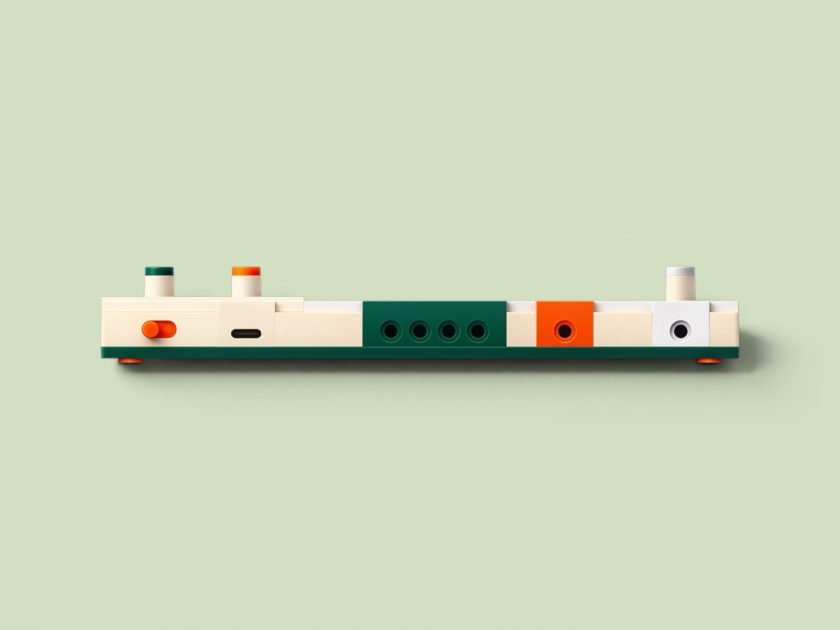
Physically, the answer is largely yes. Pick it up, and you’ll immediately notice it feels identical to the EP-133 K.O. II: sharing the chassis, the sixteen pressure-sensitive pads, speaker, USB-C, and four AAA batteries. The cream body with green-and-orange highlights is the most visible physical difference. However, as you shift your attention from its appearance to its features, some important differences emerge.
Supertone, the first built-in synth engine in EP-series history, sets the EP-40 apart. Nine bass and lead presets plus three pressure-sensitive dub sirens, shaped through two encoder knobs in real time. The bass presets carry genuine low-end weight. Run it through a proper sound system: basses with real sub-frequency authority, leads that cut through without thinning out, sirens that go from subtle movement under light pressure to full sustained wails when you lean in. Through the onboard speaker, it’s a little harsher, as the EP series has never been known for its speakers. These need to be connected to headphones or a sound system, period. Through anything with actual headroom, it’s loud, physical, and impossible to ignore.
Storage & Samples
Another design holdover, and frustration, is memory. We do love the EP series, but we cannot beg Teenage Engineering enough to please add an SD card reader. Memory is 128 MB total. All of it can be used for your samples once you delete the onboard content. Yes, that’s correct: the built-in library is deletable. If you remember from the Medieval, that was not possible. Still, space is tight. With no SD card and no expandable storage, you’ll need to curate carefully. Sampling runs at 46 kHz / 16-bit through the built-in mic or 3.5mm input. This is solid for sketches, jams, and live use. Files move fast over USB via the EP Sample Tool.
Still, before you consider erasing what’s included, it’s worth looking closer at that library. It’s fantastic, and you definitely don’t want to delete it unless you truly have to. One-drop drums, organ stabs, melodica phrases, echo-processed snares, vocal shouts, dub delays. All built from the same well, all reflecting the origins of the contributors. It’s one of the strongest collections of provided audio that Teenage Engineering has shipped with one of these units to date.
Looping, Sequencing & Effects
Loop Mode is brand-new to the EP-40, and it’s a standout feature that needs to come to the other entries in the series as soon as possible. Pads hold continuously, locked to tempo, in and out as you bring them up. The pattern builds around you while you play; you’re dropping and muting parts on the fly, the way a live dub engineer runs a session.
The sequencer underneath runs at 96 PPQN. It supports patterns up to 99 bars across 12 tracks, with up to 80,000 notes per project. Live-State mode cuts unused controls during performance. It also replaces digital timestretching with vinyl-style pitch behavior when you change tempo. You get the mechanical slowdown of a record dropping speed, not an artifact. It’s a small thing that reveals how much thought they gave to the playing and experience.
There are seven core effects: delay, reverb, distortion, chorus, filter, compressor, and phaser. Twelve punch-in effects live on the pads and vanish when your hand lifts. The X/Y lever updates at 200 Hz, so filter sweeps stay smooth. Polyphony caps at 12 stereo or 16 mono voices before stealing kicks in.
That Fun Little Microphone
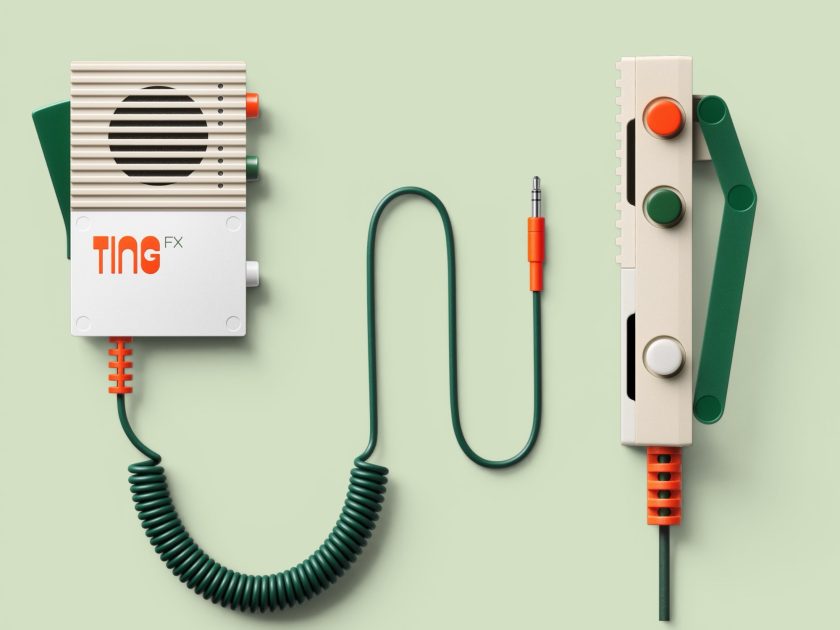
The EP-2350 TING looks like something that came in a kids’ meal. I loved it anyway. There are four voice effects, plus a lever and motion sensor for real-time modulation. Four pad-triggerable samples on the sides are loaded with airhorns and classic sound system hits out of the box. But that’s not the best part. Crack it open, and there’s a USB-C input inside for loading your own samples.
Once the TING is connected to a computer, it mounts as a drive with a JSON file that controls the effect chain. You can edit the chain, adjust parameters, add modulation, and tie movement to the onboard sensors. It is a small effects processor that you can hack into something truly special. Some people on Reddit called it goofy. Those people aren’t wrong. But it’s also the most fun peripheral Teenage Engineering has released recently. It’s easy to overlook at first. One thing to know before you buy: the TING is no longer bundled free with the EP-40. The launch window closed. It’s a separate $59 purchase now. It is still worth it.
Verdict & The EP-133 Conundrum
When the EP-133 moved to 128 MB and matched the EP-40 at $329, it muddied what was once a straightforward pitch. Whereas the added sample memory was originally a big selling point despite the specific genre focus, the EP-133 now matches it. However, the EP-40 still has many features that the EP-133 does not.
But what elevates the EP-40 are the unique features, like Supertone and Loop Mode, making this the most capable EP series unit yet. And you could wipe the whole thing and load your own samples. But that’s like making jerk chicken without the spices. What exactly is the point?
If reggae, dub, dancehall, or anything downstream of those is where you live musically, this machine is going to feel like a find.
