
When the Studio Erupts
The first time I stepped on The Fart Pedal: Number Two and hit a note to test it, the monitors let out such an aggressive blast that I glanced toward the window, half expecting a concerned neighbor to peer in. It was loud, unapologetic, and absolutely hilarious. That one moment told me everything about what I was dealing with: my inner child was going to have the time of his life playing with this pedal.
Sound / Engine
The Fart Pedal: Number Two is a sample-based effect, but it’s smarter than the premise suggests. On acoustic guitar, climbing the fretboard didn’t just pitch-shift one generic sample; the pedal actually changed the kind of fart it produced depending on pitch. Lower notes brought out deep, rumbling blasts, while higher ones turned into airy squeaks. It was nice to see something that some might dismiss as a gimmick actually produce a great variety of outputs.
Switching between Wet and Dry confirmed that the toggle isn’t just a pun. Dry gives you short, squeaky bursts. Wet turns the room into a sonic disaster zone: splatty, sustained, and, frankly, revolting in the best possible way. I cringed at the first splat, laughed, and immediately flicked it back to dry again to hear the difference.
The Random versus Pitch toggle completely changes the experience. Random is chaotic fun, sending unpredictable blasts with no rhyme or reason, wherever it wants, while Pitch locks the pedal to your playing.
Around the 40–50% Blend mark, the effect sits just behind your instrument, adding rhythmic punctuation. Push it past that, and it takes over. Out of the box, latency varied by patch when playing on a synth. Some were instant, some a hair delayed, but it never broke the fun. I did find that updating the firmware improved this tracking and made it even more reliable.
Early on, my favorite moment came from two quick, high-pitched toots back-to-back that caught me so off guard that if I weren’t recording it, I probably would’ve cried laughing. You can experience that moment in the 90-second demo video I included in this review.
Workflow & Playability
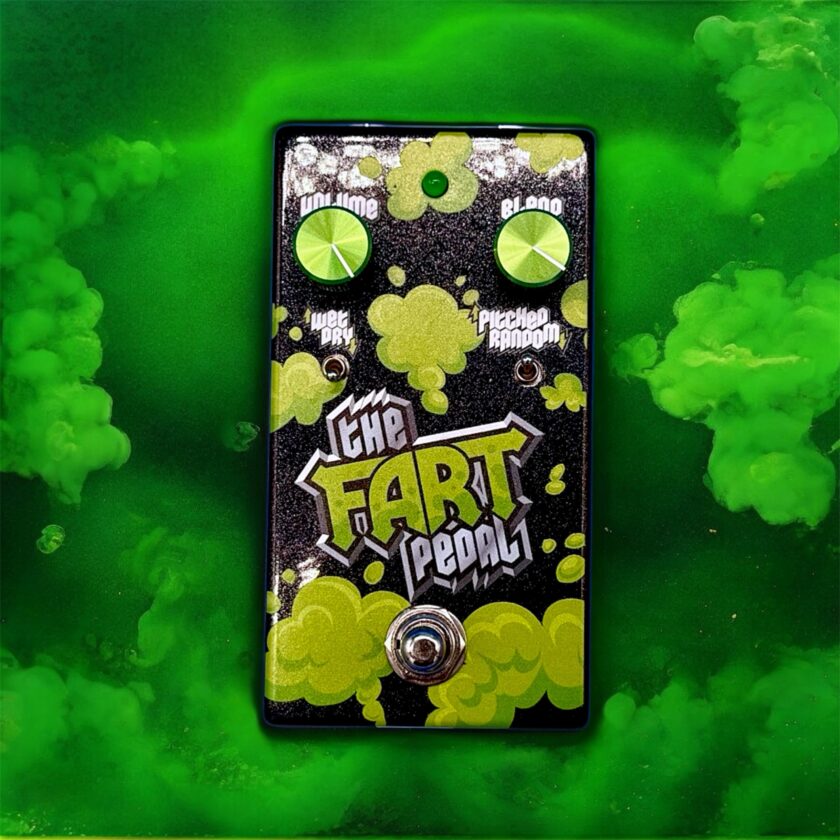
You don’t need a manual to figure this out. Two knobs, two toggles, one footswitch, that’s it. It powers via your standard 9V wall wart, and everything is clearly labeled. You can get tootin’ in a matter of moments.
Firmware updates keep things fresh. The original Legacy mode carries forty samples, and firmware 1.2 adds “Demon Shart Mode,” which I still can’t believe is a real sentence I get to type in a review. To experience the joy of this, when the pedal is on, hold your foot on the button for three seconds, and prepare to be spoken to from the depths below.
The update process is easy, but you must open the enclosure to access the micro-USB port. Steve, the creator, put together a step-by-step guide that makes it painless, though I’d love to see external access in a future version.
Build & Hardware
Physically, it’s a compact metal stompbox finished in black, with white and bright green graphics, and a glossy coat that sparkles under light. The knobs feel smooth, the toggles have a satisfying resistance, and the overall build feels sturdy. It’s small and light enough to fit onto a crowded pedalboard without sacrificing any other slots.
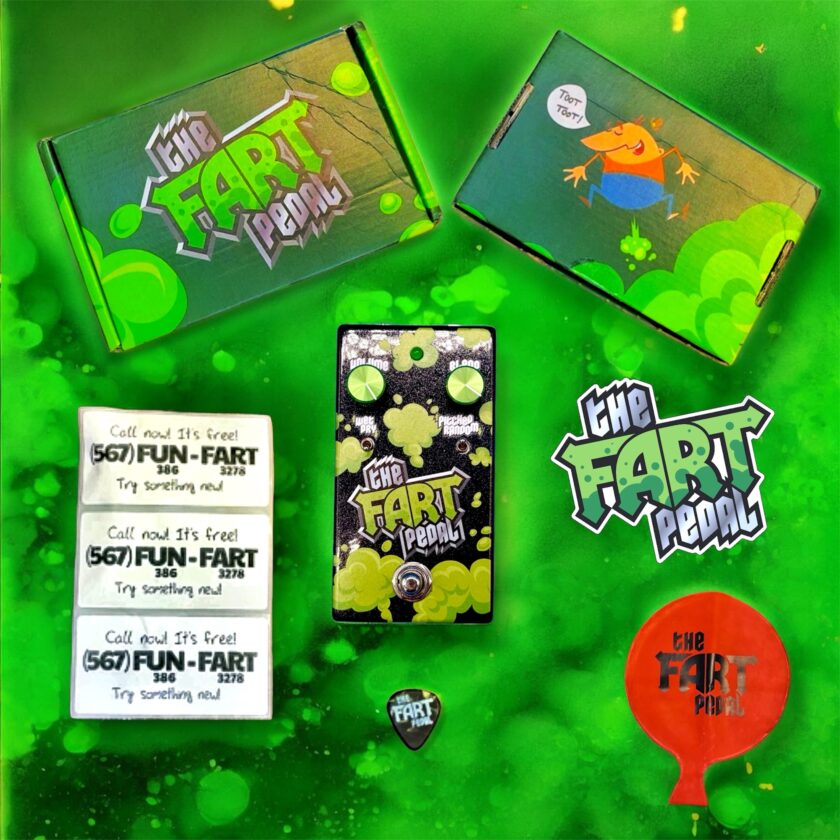
But the absolute joy comes from the packaging, something Steve was very proud of in our talks. It’s a full presentation: whoopee cushion, branded picks and stickers, a function card, and even a hotline number that plays fart sounds through a touch-tone menu. Under the foam, there’s a hidden Easter egg tied to the box art that you’d miss if you didn’t remove the foam. I won’t spoil it, but it’s pretty damned funny.
Testing Context
Tested on guitar, bass, acoustic, and synth in a small studio through nearfield monitors at moderate volume. The pedal sat mid-chain.
Final Farts/Thoughts
While I’m not in a band and thus can’t prank a crowd on tour, I’ve posted plenty of short clips to my friends and family. People either think I’ve completely lost it or that it’s the most excellent use of music technology since autotune. With pitch tracking engaged, it actually fits musically, and at full Blend, it becomes pure chaos.
The prank pedal world is woefully underrepresented, and Number Two proves how much potential there is in doing silliness well. The fart pedal is a novelty box, sure, but it’s also surprisingly well executed for a gag.
I’ve already found myself trying to figure out how we can work this into more content on Altwire, be it a recurring series testing instruments (“How Does It Fart?”), or seeing how many effects pedals we can chain together to create ambient fart art.
Here’s to laughter and never growing up.
