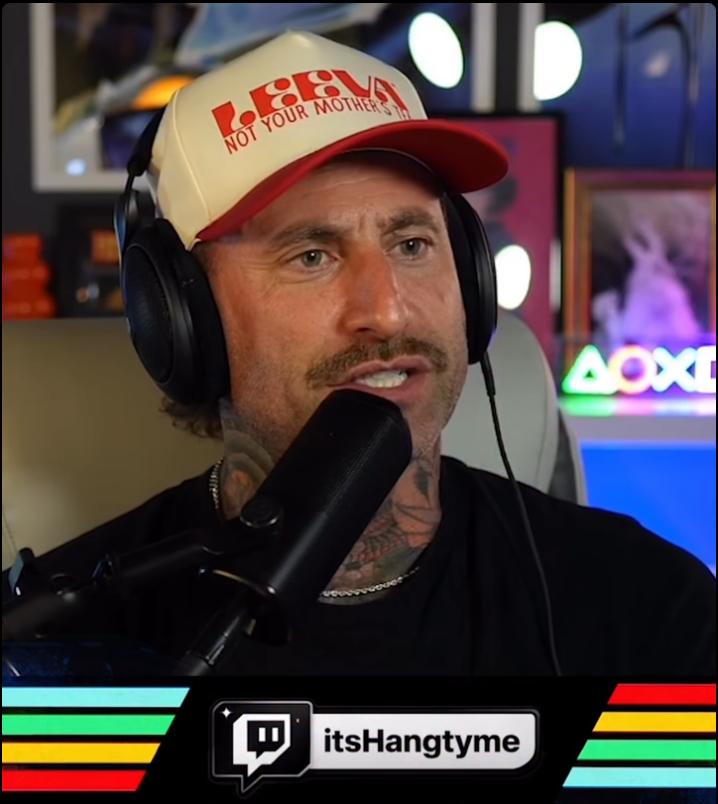
For years, Justin “Schoeny” Schoenenberger didn’t have to think very hard about who he was.
He was DJ Schoeny.
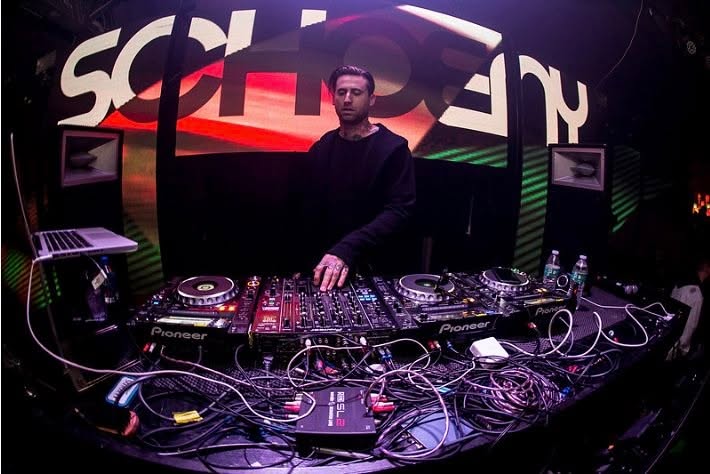
It was the name people called across nightclubs. It was attached to his music, his bookings and his travels. It followed him from San Diego bars to bigger stages, into production, and eventually into All Gold alongside friends and collaborators who would go on to make their own marks on electronic music.
DJing wasn’t simply something Schoeny did for money. It had become the framework around which he built his life.
Then, in 2021, he was forced to confront a question he had never seriously considered:
What happens when you can’t do the thing that has defined you for years?
“I was really scared at first because I didn’t know who the hell I was,” Schoeny says.
Today, the answer to that question looks considerably different. Schoeny is building a new audience online under the name HANGTYME, trading packed nightclubs and late nights for video games, cameras and livestreams.
Getting there, however, meant learning that walking away from one version of yourself doesn’t mean losing yourself with it.
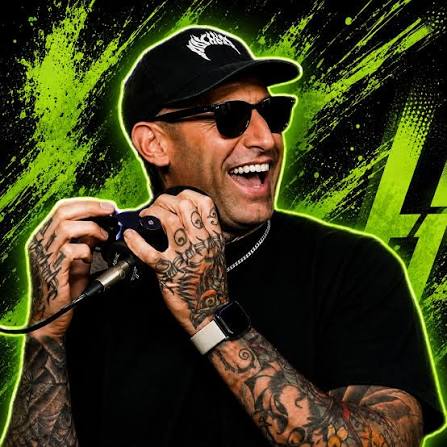
Becoming DJ Schoeny
Schoeny arrived in San Diego in 2006 after serving four years in the U.S. Navy, where he was stationed in Japan. Originally from Northern California, his initial plan was simple: spend a few months in San Diego after leaving the military, enjoy himself, and eventually head home.
San Diego had other plans.
“San Diego, as you know, it’s a beautiful city, and I just couldn’t leave,” he says. “It went from one year to two years. I was like, ‘All right, one more year, then I move back up north,’ and then I just ended up staying.”
Twenty years later, he’s still there.
Music was already part of Schoeny’s life long before San Diego. He had DJed since junior high, playing his sister’s birthday parties and even school proms. At the time, though, he viewed it as something he loved rather than something that could become a career.
That began to change as he immersed himself in San Diego nightlife.
He watched DJs including Scooter and Lavelle and Sid Vicious command rooms at venues like Stingaree, Red Circle, 4th & B and the Hard Rock. For a while, he simply admired what they were doing.
“I didn’t even connect that we were the same type of person that loved DJing,” he remembers. “I was just like, ‘Ooh, that is impressive,’ seeing these DJs orchestrate this musical journey in this nightclub.”
Eventually, friends started pointing out the obvious.
Didn’t he DJ, too?
The answer was yes. He just hadn’t imagined himself on the other side of the big stage booths yet.
So he started small: boutique clothing stores in Pacific Beach, breweries, college bars and whatever opportunities allowed him to get behind the decks.
Then the ladder began.
From the Booth to All Gold
As Schoeny became more established in San Diego nightlife, DJing naturally led him toward production.
It was the era when mashups and bootlegs were everywhere. DJs weren’t just playing records; increasingly, they were creating their own edits, smashing unlikely songs together and looking for ways to distinguish their sets from everyone else’s.
Schoeny began experimenting.
“I don’t have a musical ear. I don’t know scales. I’m pretty sure I’m tone deaf,” he jokes. “I actually sit down and just mess with stuff until it sounds good.”
Years behind the decks had nevertheless taught him something equally valuable: he could recognize when an idea worked.
Around 2010 or 2011, he connected with fellow San Diego DJ and producer Cheyenne Giles. The two were at similar stages in their careers and eventually began pushing one another further into music production.
That relationship ultimately led Schoeny into All Gold, a project Giles had previously started with another collaborator. After that partnership ended, Schoeny saw an opportunity.
“I was like, ‘Yo man, let me in. I’m a fan, but I want to take All Gold to another level. I think what you have is special.’”
Not long afterward, another young producer reached out through SoundCloud: Knock2.
At the time, Knock2 was still in high school.
Schoeny and Giles were impressed enough by his music that working together required an unusual extra step: driving to North County, meeting his parents and explaining why two older DJs wanted to pick their son up from school and bring him back to a San Diego studio.
The three would spend hours together working on music, laughing and figuring out production as they went.
All Gold eventually played venues including Omnia and traveled for performances outside San Diego. There were even occasions when Knock2 appeared on the group’s promotional material but couldn’t actually join Schoeny and Giles inside the nightclub because he wasn’t yet 21.
Eventually, the three went their separate ways. There was no dramatic breakup. Their lives and careers were simply moving in different directions.
Giles and Knock2 would continue climbing through electronic music, while Schoeny continued touring and performing under his own name.
He had accomplished something thousands of aspiring DJs chase: DJing wasn’t the hobby anymore.
It was his life.
And that made what came next much harder.
When the Volume Becomes the Problem
Long before nightclubs, Schoeny had spent years around a very different kind of volume.
During his military service, he worked in aviation around F/A-18 fighter jets in Japan. He says hearing protection was part of the job, but years later, hearing problems and persistent ringing in his ears began catching up with him.
DJing had subsequently placed him in loud environments for years.
By 2021, Schoeny says his tinnitus had become difficult to ignore.
“I literally had ringing in my ears 24/7,” he says.
After discussing his hearing with an audiologist, Schoeny was advised that stepping away from the loud environments associated with DJing would be a smart move for protecting the hearing he still had.
The timing couldn’t have felt much worse.
The COVID-19 pandemic had already devastated nightlife. DJs had spent months waiting for clubs, bars and events to fully return. Just as the world began opening back up, Schoeny was faced with the realization that going back to his old life might not be worth the risk.
He decided to listen.
“I had to be smart about it,” he says. “I just didn’t want to keep going and then when I’m 60 or 70, just be in a living hell of ringing in my head.”
Schoeny is careful not to attribute his hearing problems solely to DJing. His military aviation experience was a significant part of his hearing history. But after years of working inside clubs, he also came away with a message for other DJs.
Protect your ears.
He recalls working in booths where monitors could become excessively loud and watching DJs repeatedly expose themselves to high sound levels night after night.
“We work here so many nights a week,” he says. “You’ve got to be careful, man.”
For Schoeny, being careful now meant slowing down the career he had spent years accelerating.
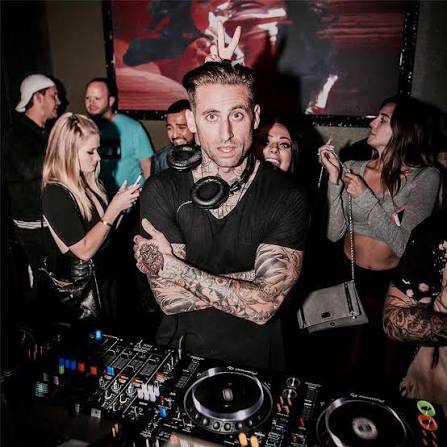
“Who the Fuck Am I?”
There was the practical question of what Schoeny would do next.
Then there was a much harder one.
Who was he without DJing?
“My real name’s Justin, and not a lot of people call me Justin,” he explains. “Schoeny’s been my nickname since third grade. So Schoeny just turned to DJ Schoeny, and now everyone just calls me Schoeny.”
The line between his identity and his profession had almost disappeared.
His routine reinforced it. Travel. Perform. Come home. Work on music. Go back to the nightclub. Repeat.
Even success created its own anxiety.
“If I wake up and there’s not 20 text messages asking for me to be booked somewhere, I’m losing,” he remembers thinking.
It was a rat race, and for years, stopping felt more dangerous than continuing.
Then stopping was no longer optional.
“What do I do?” he remembers asking himself. “What am I going to do for money?”
And beneath all of those questions was the biggest one:
“Who the fuck am I?”
Schoeny began figuring it out.
He went to therapy related to his tinnitus and hearing loss. He spent more time at the gym. Rather than completely abandoning DJing, he found quieter environments where he could perform early happy-hour and lounge sets without subjecting himself to the same conditions he had encountered in nightclubs.
He also leaned into skills he had accumulated almost accidentally over years of being a working DJ and producer.
He knew audio.
He knew video.
He knew how to edit.
He knew how to entertain people.
And for the first time, he began recognizing how much of his old career could exist outside a nightclub.
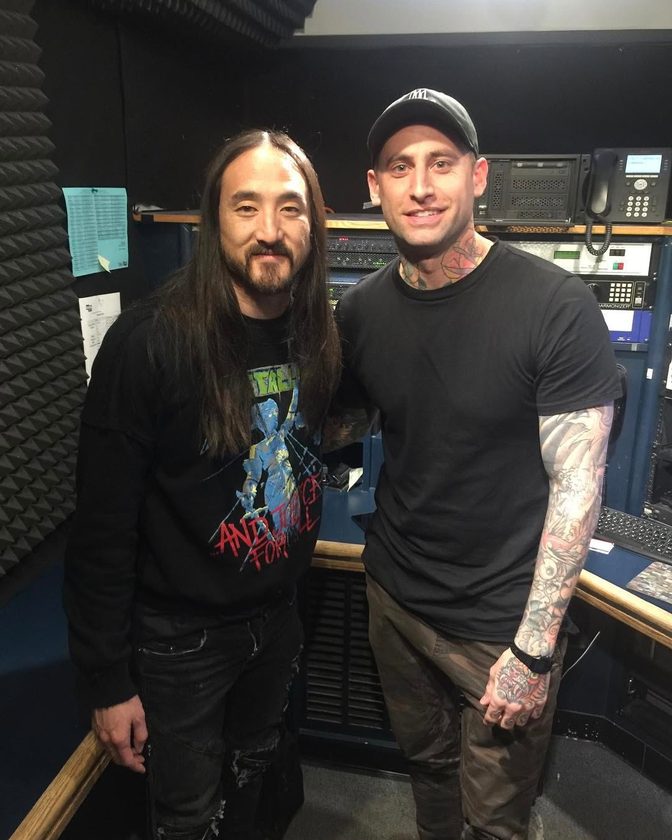
Finding HANGTYME
Schoeny had actually stumbled onto the foundation of his next career before he knew he would need one.
During the pandemic, a friend suggested he take the DJ sets he was already performing online and bring them to Twitch.
Schoeny initially resisted.
“What’s Twitch?” he remembers asking.
Eventually, he gave it a shot.
With nightlife shut down and audiences stuck at home, Schoeny and his friends turned livestreaming into their temporary nightclub. Cameras, lights and DJ equipment filled the room as they broadcast sets online.
The response surprised him.
“I made enough money to pay my mortgage and keep up with bills,” he says.
When clubs reopened, streaming receded as DJing returned. But after his hearing problems forced him to reconsider that path, the experience remained in the back of his mind.
Then another lifelong interest began filling the gap: video games.
Schoeny had grown up on games like Tony Hawk’s Pro Skater, Super Mario Sunshine, Pilotwings and Spyro. As an adult, his tastes expanded into games including God of War, Elden Ring, Bloodborne and Returnal.
In late 2025, he decided to take streaming seriously again.
This time, instead of building the show around the decks, he built it around himself.
HANGTYME was taking shape.
Building an Audience All Over Again
There is an interesting symmetry between Schoeny’s two careers.
Becoming a DJ required more than knowing how to mix two records. He had to learn how to perform, promote himself, build relationships, understand technology and keep an audience engaged.
Streaming demands many of the same things.
Schoeny quickly learned that simply turning on Twitch and playing a game wasn’t enough.
“The one thing about Twitch that is frustrating is there’s no discoverability on it,” he says. “People don’t go there and search for streamers. They end up there because they saw a streamer on Instagram or TikTok.”
So HANGTYME became more than the hours Schoeny spends live.
He cuts his streams into short-form videos, distributes them through social platforms and uses those clips to introduce new people to his personality. Those viewers can then make the jump from a Reel or TikTok to spending time with him live.
“Everyone that comes in my chat is like, ‘Dude, I’ve been seeing your reels nonstop. I’m so glad I could catch you on Twitch.’”
It’s a different stage, but many of the instincts are familiar.
The nightclub crowd has become a chat window. The DJ equipment has been joined by gaming PCs, consoles, cameras and streaming software. Instead of worrying about the next song, he might be reacting to a game while simultaneously interacting with viewers.
Even the chaos feels familiar.
Schoeny compares learning to stream with learning to DJ in a busy nightclub. At first, every distraction can overwhelm you. Eventually, your brain learns how to process the room.
“Veteran DJs, we can handle it,” he says. “It’s just like your brain has that computer RAM.”
Maybe Schoeny never stopped being a DJ as much as he thought he did.
The skills simply found somewhere else to go.
You Are More Than the Thing You Do
Looking back, one of Schoeny’s biggest realizations came only after he slowed down.
He hadn’t fully appreciated how successful he had become.
When every week was about getting the next booking, keeping the calendar full and making sure another DJ didn’t take his place, there wasn’t much time to recognize what he had already built.
Once he stepped away from the race, he discovered that a couple of quieter gigs each week could help keep him afloat while he explored what else his life could become.
It gave him something he rarely allowed himself before:
Space.
“If I could give advice to DJs — but they wouldn’t take it, and I wouldn’t take my advice if I told myself this 10 years ago — take a break,” he says. “Take a month off and just figure out who the fuck you are without DJing.”
For Schoeny, circumstances ultimately forced that break upon him.
What initially felt like losing his identity became an opportunity to examine it.
DJ Schoeny was real. All Gold was real. The flights, clubs, records, production sessions and years spent chasing the next booking were all pieces of him.
But they weren’t all of him.
Today, HANGTYME gives Schoeny a way to perform without placing himself back inside the environments he needed to leave behind. His audience may be watching him conquer a boss instead of commanding a dance floor, but the person entertaining them is still the same one who learned years ago how to hold a room.
His old life needed to fade out before his hearing did.
What emerged wasn’t a former DJ wondering what to do next.
It was someone who finally understood that losing a career doesn’t have to mean losing yourself.
Connect with Hangtyme:
https://www.twitch.tv/itshangtyme
https://www.instagram.com/itshangtyme